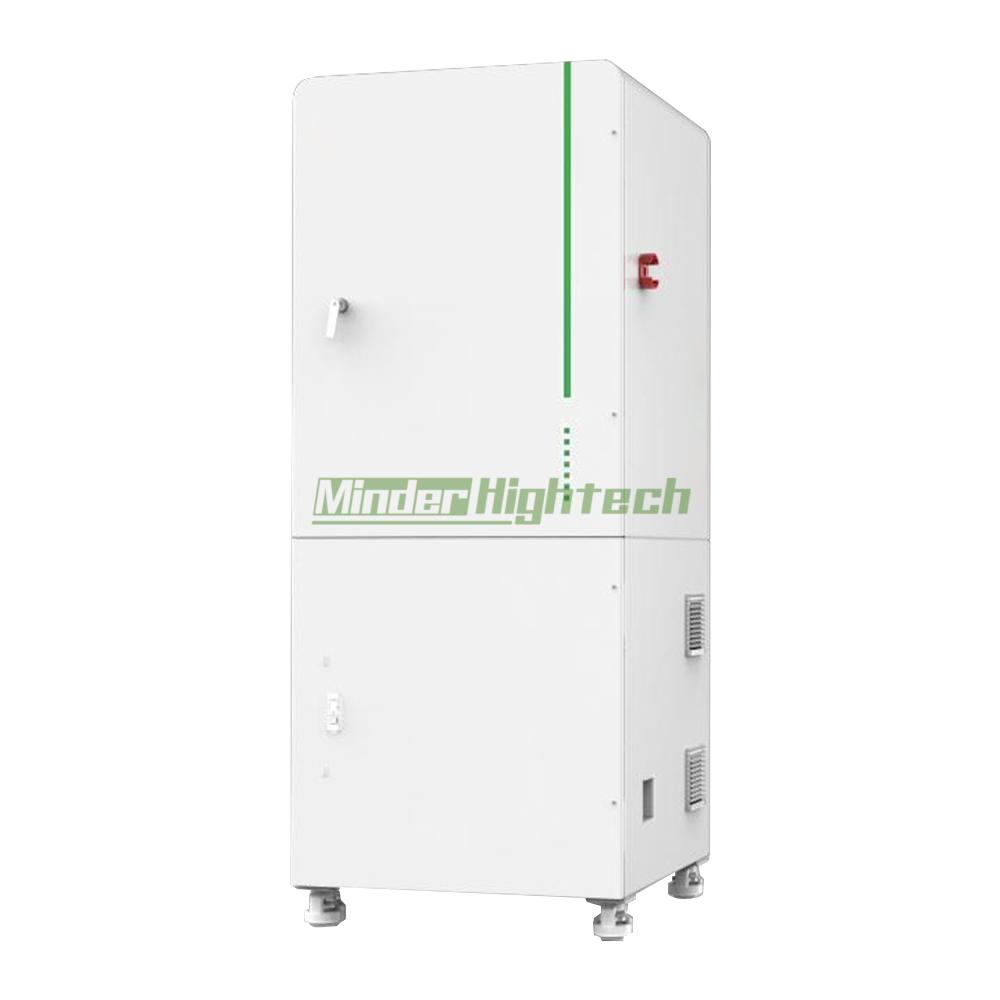
1. Product Overview
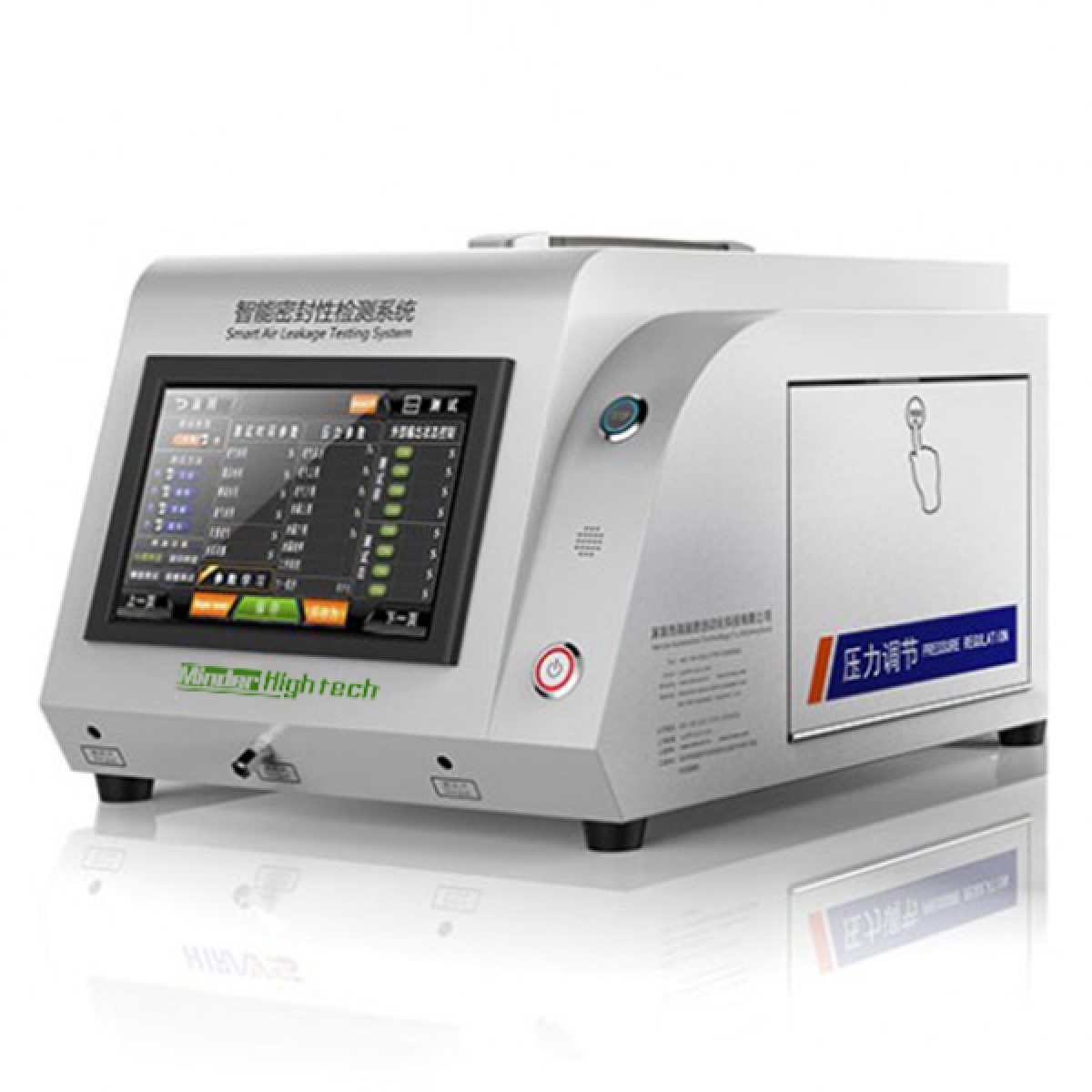
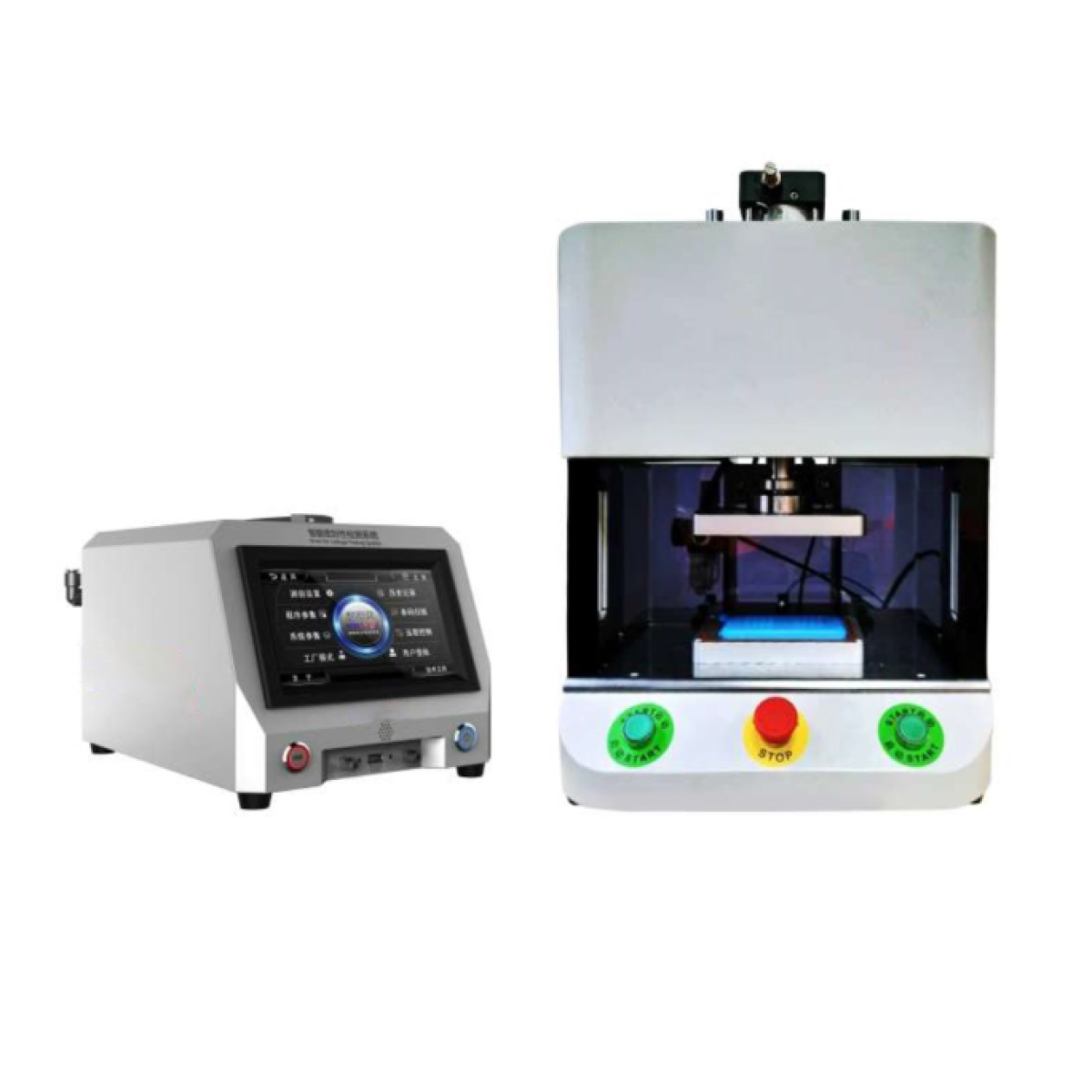
This product is a photoluminescence (PL) and electroluminescence (EL) testing system designed specifically for perovskite solar cells, modules, and optoelectronic devices.
Integrating high-sensitivity infrared imaging with a precision current-voltage source, the system provides research institutions and manufacturers with a solution for rapid, accurate, and non-destructive internal defect detection and performance assessment. It serves as an indispensable tool for advancing perovskite technology from the laboratory to large-scale mass production.
The PLEL tester supports the entire lifecycle of technology development and industrialization. During the cutting-edge R&D phase, it acts as a powerful diagnostic tool—offering researchers deep insight into the physical properties of materials and devices—by precisely evaluating how new formulations and processes affect internal microstructures and charge-carrier behavior, thereby providing a critical basis for performance breakthroughs.
In the vital areas of product lifespan and reliability assessment, the system can be integrated with aging test setups to monitor—in real-time—performance degradation trajectories and defect evolution under harsh conditions such as long-term operation and temperature-humidity cycling. By providing intuitive data to optimize encapsulation techniques and enhance product durability, it serves as a reliable enabler for accelerating the transition of perovskite technology from the laboratory to commercial application.
2. Functional Modules
|
Category |
Purpose |
|
PL Imaging |
A non-contact testing method that helps monitor process anomalies and provides information on the distribution of surface defects in perovskite cells. |
|
EL Imaging |
Used to analyze cell defects, particularly anomalies related to electrodes and contacts. As a contact-based test, it is suitable only for finished cells; testing is performed by connecting alligator clips to the sample's positive and negative terminals. |
3. Technical indicators
|
Name |
Specifications |
|
Testable sample types |
Perovskite/c-Si tandem solar cells (compatible with both process wafers and finished cells) |
|
Measurable sample dimensions |
Compatible with perovskite/c-Si tandem cells up to 300 x 300 mm in size |
|
Operating modes |
Offline installation |
|
Light source uniformity |
≥95% |
|
Hardware configuration |
Cameras: 25-megapixel cameras (dual-camera setup: one for perovskite imaging with a 700–900 nm bandpass filter; one for c-Si imaging with a 900 nm long-pass filter) Exposure time: 10 µs – 30 s Spectral response range: 400 nm – 1100 nm |
|
Lens: High-definition wide-angle lens |
|
|
Filters: 700–900 nm bandpass filter 900 nm long-pass filter |
|
|
PL Light Source: Laser. Short-wavelength: 450 nm ± 5 nm (1 set); Long-wavelength: 808 nm ± 5 nm (1 set). |
|
|
Programmable control; constant current or constant voltage modes; voltage range: 0–30 V; current range: 0–10 A |
|
|
Basic functions |
PL imaging, EL imaging |
|
Image adjustment functions |
1. Automatic calibration (correction of light intensity uniformity; eliminates image brightness unevenness caused by the camera lens and excitation light non-uniformity) 2. Intelligent black-border cropping (automatically identifies and crops out areas at the edges of the solar cell that lack luminescence signals or exhibit abnormal signals) 3. Histogram adjustment (adjusts the display range of the image's grayscale histogram) 4. Uniformity adjustment (quantitatively evaluates and visually highlights the luminescence uniformity of the solar cell itself) 5. False-color mode (maps a grayscale image—where varying brightness levels represent different luminescence intensities—into a color image using a preset color lookup table) |
|
Local statistical analysis function |
Perform grayscale analysis on a designated area and compile statistics based on the grayscale values of the pixels. |
|
Auxiliary functions |
1. Image saving: Compressed format (JPG) or lossless format (PNG). 2. Reporting function: Record data for each sample; generate an Excel database in the background. 3. Localized statistical analysis; generate an Excel database in the background. |
|
Protection devices |
One set of laser safety goggles. |
|
Dimensions |
Subject to the actual product. |
|
Power supply |
Single-phase, AC 220V, 50Hz. |
|
Power rating |
Rated: 1000W; Peak: 2000W. |
Contact: Minder Hu
Phone: 0086-15813334038
Tel: 020-84789496
Email: md@minder-hightech.com
Add: 813,No.43,Xinshuikeng Section, Shixin Road, Dalong street,Panyu District,Guangzhou. Zip:511442