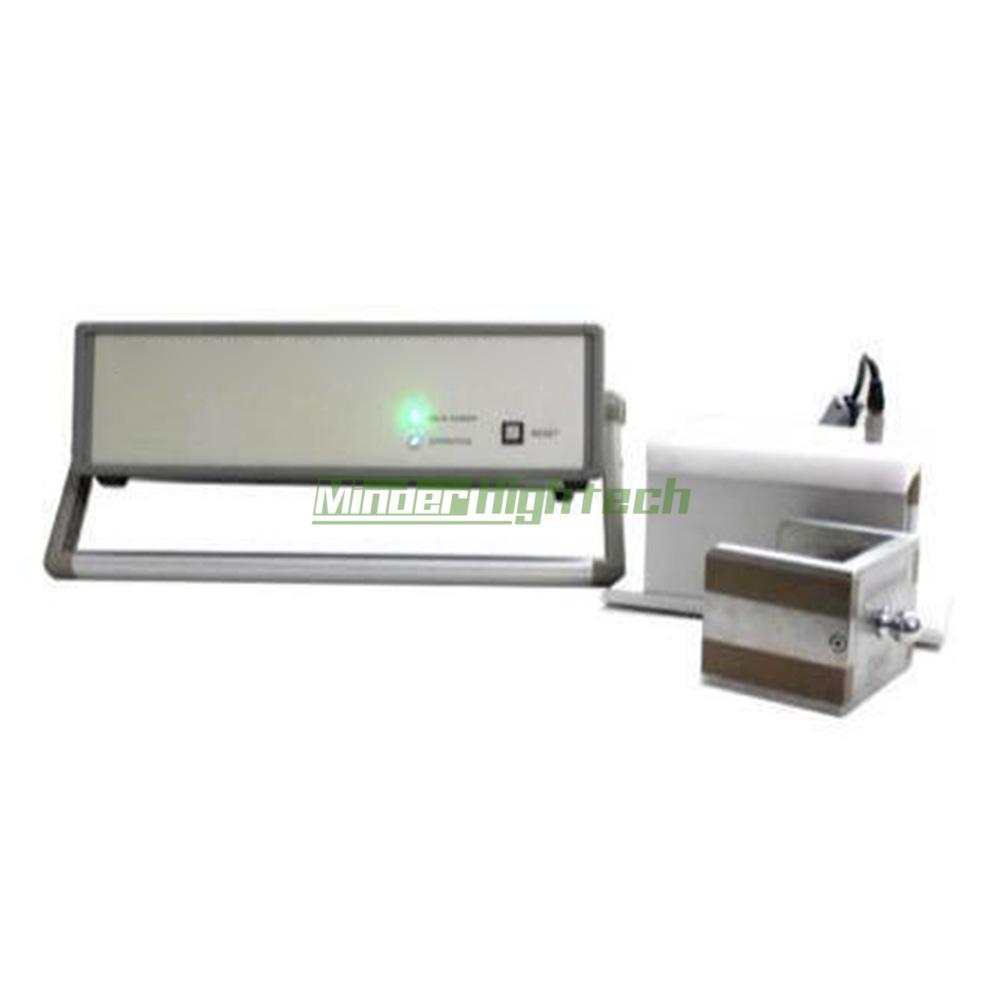
1. Product Overview
The MD-HMS-3000 Hall Effect Measurement System is a mature instrument suite comprising a constant current source, a Van der Pauw method terminal converter, a low-temperature (77K) measurement system, and a magnetic field input system; it incorporates all the components and configurations necessary for researching the Hall effect in semiconductor materials.
The MD-HMS series has secured multiple patents for Hall effect measurement systems and methodologies, representing world-class quality at a reasonable price point and earning recognition from customers globally; the product received CE certification in July 2004.
The MD-HMS-3000 Hall Effect Tester is primarily used to measure key parameters of semiconductor materials—such as carrier concentration, mobility, resistivity, and the Hall coefficient. As these parameters are essential for understanding the electrical properties of semiconductor materials, the Hall effect tester serves as an indispensable tool for the research and analysis of semiconductor devices and materials.
2. Product Features
Reliable Accuracy and Reproducibility
The constant current source (1 nA–20 mA) utilizes a six-range setting to minimize potential error; the Van der Pauw switching mechanism employs non-contact components to effectively reduce instrument noise; and the targeted hardware and software design ensures that each data point represents the average of multiple measurements, resulting in excellent data reproducibility.
Compact Design and Simplified Operation
The compact magnetic field input system utilizes permanent magnets and a liquid nitrogen cryostat (77 K) for simple operation; support for two standard sample board sizes (20×20 mm and 5×5 mm) as well as a spring-clip sample board (SPCB) facilitates the measurement of thin-film samples of various sizes and materials; the spring-clip design simplifies Hall electrode fabrication and minimizes sample damage compared to traditional mounting methods.
I-V and I-R Curve Measurement
Graphical analysis is used to measure current-voltage and current-resistance relationships across the four probe points (A, B, C, D), enabling the assessment of ohmic contact quality and the characterization of the sample's fundamental electrical properties.
Comprehensive Experimental Results
Experimental results are automatically calculated by the software, providing parameters such as bulk carrier concentration, sheet carrier concentration, mobility, resistivity, Hall coefficient, magnetoresistance, and the vertical/horizontal resistance ratio.
3. Product Composition
Main Unit: Precision constant current source + Van der Pauw terminal converter
4. Technical Specifications
|
Name |
Specifications |
|
Mobility measurement range |
1–10⁷ (cm²/(V·s)) |
|
Carrier concentration measurement range |
10⁷–10²¹ (cm⁻³) |
|
Resistivity measurement range |
10⁻⁵–10⁻⁷ (Ω·cm) |
|
Repeatability specification |
Mobility and carrier concentration (ITO standard sample): Results based on 10 measurements; deviation <3%; calculated as (Max - Min) / (Max + Min) |
|
Input current |
1 nA–20 mA |
|
Magnetic field strength |
0.51 ± 0.02 T (Tesla) |
|
Test temperature |
Ambient temperature, 77 K (liquid nitrogen); upgradeable to a high-temperature accessory (up to 300°C) |
|
Sample measurement board |
PCB sample boards: 5 × 5 mm, 20 × 20 mm |
|
Magnet type |
Permanent magnet; magnetic flux density: 0.51 ± 0.02 T; upgradeable to a variable-field magnet |
|
Sample board |
Detachable design; IC-style plug-in contact mechanism between the sample board and the instrument, allowing for removal or loading within 1–2 seconds |
|
Fixture |
Equipped with spring-loaded sample clamps designed to prevent sample scratching; upgradeable to full-wafer testing (up to 2-inch wafers) |
|
Dell computer configuration |
Intel Core i5 CPU, 16 GB RAM, 256 GB SSD + 1 TB HDD, Windows 11 OS, 23.8-inch monitor |
Contact: Minder Hu
Phone: 0086-15813334038
Tel: 020-84789496
Email: md@minder-hightech.com
Add: 813,No.43,Xinshuikeng Section, Shixin Road, Dalong street,Panyu District,Guangzhou. Zip:511442